
Loan Affordability Calculator (USA)
📋 Your Affordability
💡 Ready for the next step?
How to Use the Loan Affordability Calculator
The loan affordability calculator helps you determine how much you can safely borrow based on your income, existing debts, and down payment. It uses the standard Debt-to-Income (DTI) ratio that lenders use to qualify borrowers. This is a crucial first step before house hunting or car shopping.
Why Affordability Matters in 2026
With interest rates remaining elevated and home prices still high, knowing what you can truly afford is more important than ever. Many buyers make the mistake of borrowing the maximum a lender offers, leaving no room for life’s unexpected expenses. This calculator helps you set a responsible budget.
- Housing: 28% of gross income is a safe guideline for housing costs
- Total Debt: Keep all debt payments under 36% of your income
- Emergency Buffer: Never max out your budget – leave room for savings
Understanding Debt-to-Income Ratio (DTI)
Lenders use DTI to evaluate your ability to manage monthly payments. It’s calculated by dividing your total monthly debt payments by your gross monthly income.
- Front-end DTI: Housing costs only (mortgage, taxes, insurance) – should be below 28%
- Back-end DTI: All debt payments (housing + credit cards + loans) – should be below 36% (max 43%)
Example: If you earn $7,000/month ($84,000/year), your total debt payments should stay under $2,520 (36%). This calculator uses the back-end DTI to give you a safe estimate.
Example: How Much House Can You Afford?
Let’s say you earn $85,000/year, have $500 in monthly debts, and have $20,000 saved for a down payment. With a 6.5% interest rate on a 30-year loan, you can afford a home up to $280,000. Your monthly payment would be around $1,800, keeping your DTI at a healthy 36%.
Tips to Increase Your Affordability
- Pay down debt: Reducing credit card balances lowers your DTI and increases what you can borrow.
- Save for a larger down payment: More money down means borrowing less and lower monthly payments.
- Improve your credit score: A higher score qualifies you for lower interest rates, increasing affordability.
- Consider a longer loan term: 30-year mortgages have lower payments than 15-year, but you’ll pay more interest.
- Shop around for rates: Even a 0.5% rate difference can save thousands.
Lender Standards in 2026
Most lenders in 2026 follow these guidelines:
- Conventional loans: DTI up to 43% (prefer under 36%)
- FHA loans: DTI up to 50% with compensating factors
- VA loans: More flexible, but lower DTI is better
- Auto loans: Lenders look at DTI and credit score
This calculator uses the conventional loan standard (36% DTI) to give you a conservative, safe estimate.
Conclusion
Knowing your loan affordability before you shop puts you in control. You’ll avoid the disappointment of falling in love with a house or car you can’t afford, and you’ll have confidence when negotiating. Use this calculator as your starting point, then talk to lenders to get pre-approved.
Frequently Asked Questions
⚠️ Important Disclaimers & Privacy
📊 No Data Storage: All calculations on Loan Logic Tool are performed 100% in your browser. We do not store, sell, or share any financial information you enter.
📈 Educational Purpose Only: This content is for informational and educational purposes only. It does not constitute financial advice. Loan Logic Tool is not a lender, broker, or financial institution. This is an estimate, not a loan pre-approval.
📅 Last updated: March 2026. For our complete policies, see our Disclaimer & Privacy Page.
How Loan Affordability Works in the USA
In the United States, lenders typically use the debt-to-income (DTI) ratio to determine how much you can borrow. Most financial institutions follow the 36% rule, meaning your total monthly debt should not exceed 36% of your income. This loan affordability calculator helps you estimate your borrowing limit based on real U.S. lending standards.
Loan Affordability Calculator USA: How Much Can You Borrow?
If you’re planning to take out a loan in the United States, one of the most important questions is: how much can you afford to borrow? Using a loan affordability calculator USA helps you understand your financial limits before applying for any loan.
Real Example: Loan Affordability in the USA
Let’s look at a real-world example to better understand how a loan affordability calculator USA works. Suppose you earn $4,500 per month and currently pay $500 toward existing debts like credit cards and car loans.
Using the recommended 36% debt-to-income rule, your total monthly debt should not exceed $1,620. Since $500 is already used, you can afford an additional $1,120 toward a new loan payment.
This simple calculation shows how powerful a loan affordability calculator USA can be. It gives you a clear financial boundary before you commit to any loan agreement.
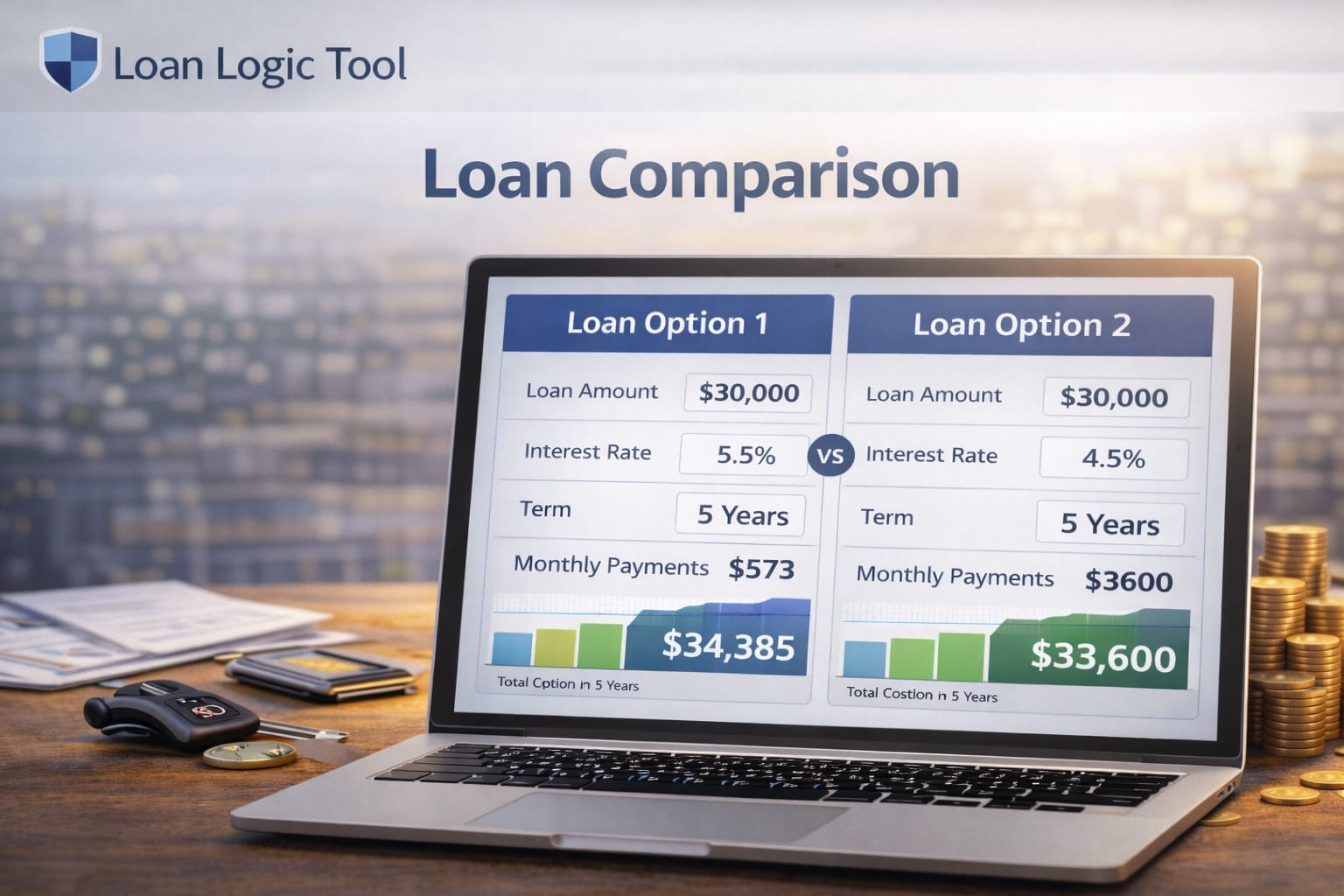
Compare Different Loan Options
Another advantage of using a loan calculator is the ability to compare multiple scenarios. You can adjust the interest rate, loan term, and loan amount to see how your monthly payment changes.
For example, choosing a longer loan term may reduce your monthly payment, but it increases the total interest paid over time. This is why smart borrowers always test different options before making a final decision.
Helpful Financial Resources
To learn more about loan affordability and financial planning in the United States, you can visit trusted sources like Consumer Financial Protection Bureau. They provide reliable guidance on loans, budgeting, and managing debt.
You can also explore other tools on our website to improve your financial decisions:
Using a loan affordability calculator USA along with these tools will help you stay in control of your finances and avoid unnecessary financial risks.
Lenders in the U.S. typically evaluate your debt-to-income ratio (DTI) to determine your borrowing capacity. This means they compare your total monthly debt payments to your gross monthly income. A lower DTI ratio increases your chances of approval and helps you secure better interest rates.
Understanding the 36% Rule
A common rule used by lenders is the 36% rule. According to this guideline, your total monthly debt should not exceed 36% of your income. For example, if you earn $5,000 per month, your total debt payments should ideally stay below $1,800.
This is where a loan affordability calculator USA becomes extremely useful. It helps you instantly estimate how much loan you can safely take without putting your finances at risk.
Why Loan Affordability Matters
Borrowing more than you can afford is one of the most common financial mistakes. It can lead to missed payments, high interest costs, and long-term financial stress. By using a loan calculator, you can plan ahead and make smarter decisions.
For example, imagine you qualify for a $40,000 loan based on your income. While it might be tempting to borrow the full amount, choosing a smaller loan can reduce your monthly burden and save you money over time.
Key Factors That Affect Your Loan Limit
- Monthly Income: Higher income increases your borrowing power.
- Existing Debt: Credit cards, car loans, and other debts reduce your capacity.
- Interest Rate: Higher rates mean higher monthly payments.
- Loan Term: Longer terms reduce monthly payments but increase total interest.
Understanding these factors allows you to adjust your inputs in the calculator and find the best loan scenario for your situation.
Smart Tips Before Applying
Before applying for a loan in the U.S., consider improving your financial profile:
- Pay down existing debts to lower your DTI ratio
- Check your credit score and improve it if needed
- Avoid taking multiple loans at the same time
- Compare different lenders and interest rates
Using a loan affordability calculator USA is the smartest first step before committing to any loan. It gives you clarity, control, and confidence in your financial decisions.